
Location
Barcelona, Spain
School
Escola Lavínia
Project /Design
Municipality of Barcelona + ICTA-UAB + ISGlobal
Programme
‘Protegium Les Escoles’
Date
2020
Area
3.600 m2
Dimensions
18 m Width; 180 m Length
Surfaces
180 m2 permeable; 3.420 m2 impermeable
Ground floor
50%Public Spaces; 10% Dwellings; 40% School
About
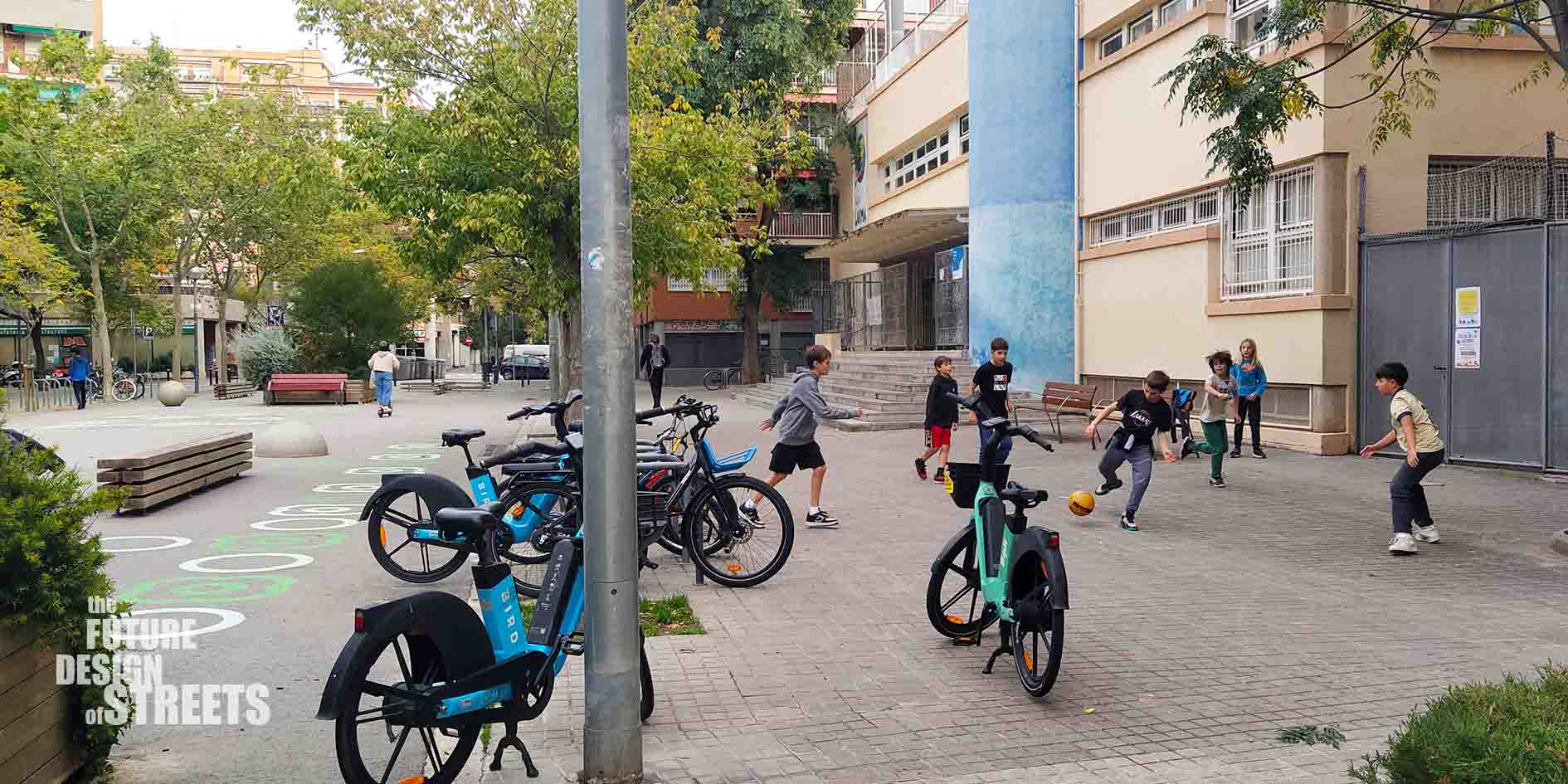
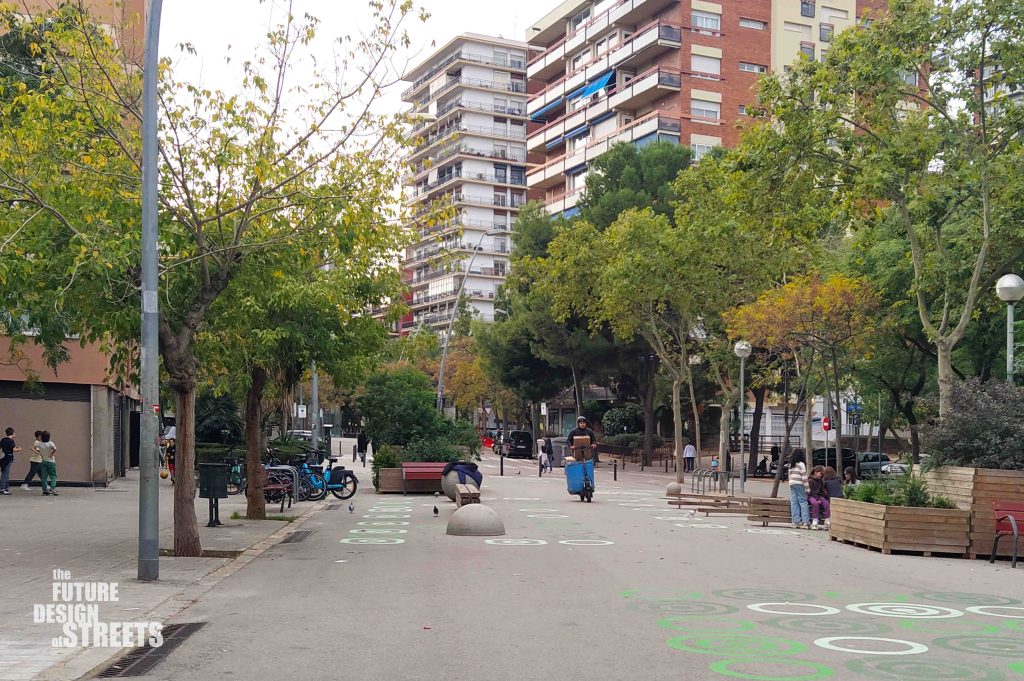
The intervention on Carrer de Fígols, developed as part of Barcelona’s Protegim les Escoles programme, represents a clear example of a contemporary school street transformation in which public space is reconfigured to prioritise children, pedestrian safety and community use. Located adjacent to Escola Lavínia in Barcelona, the project converts a formerly traffic dominated street into a multifunctional public environment connected to everyday school life.
Prior to the intervention, the street functioned primarily as a vehicular corridor with limited pedestrian crossing opportunities and frequent congestion associated with school drop-off activity. The spatial configuration was uneven: one pavement operated mainly as a circulation zone for families entering the school, while the opposite side, adjoining Plaça del Sòl de Baix, already supported more informal recreational and pedestrian uses due to its greater width and tree coverage.
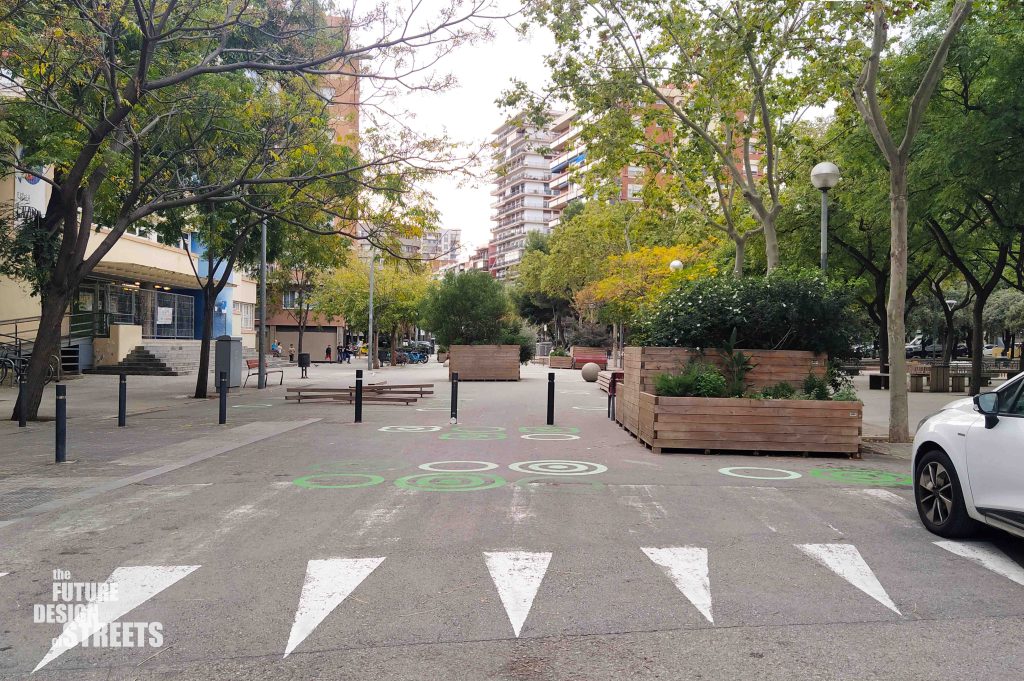
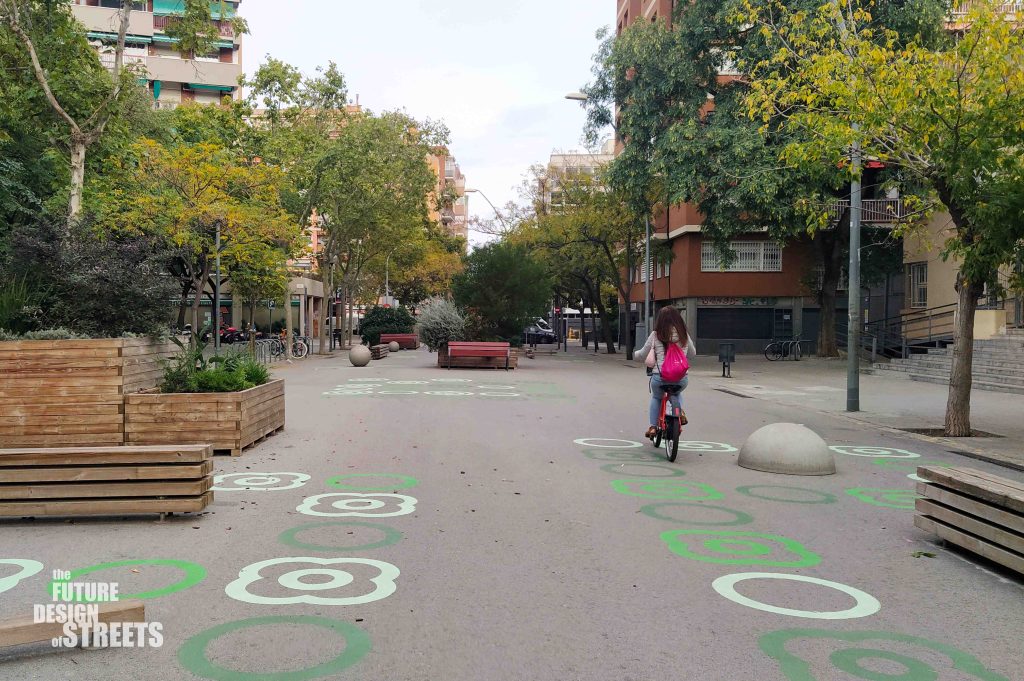
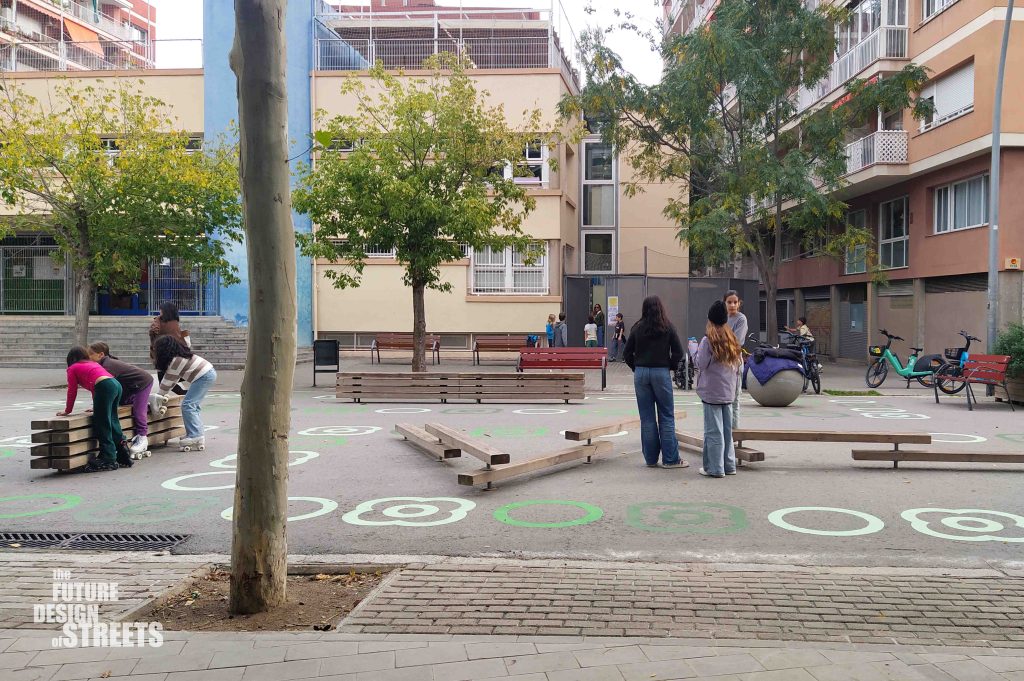
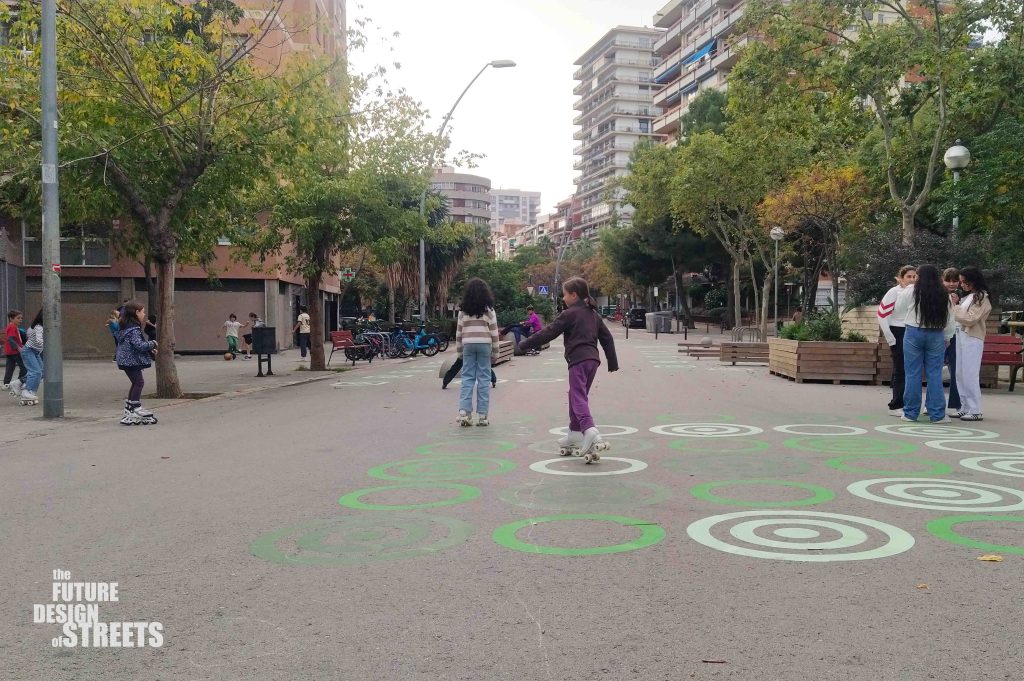
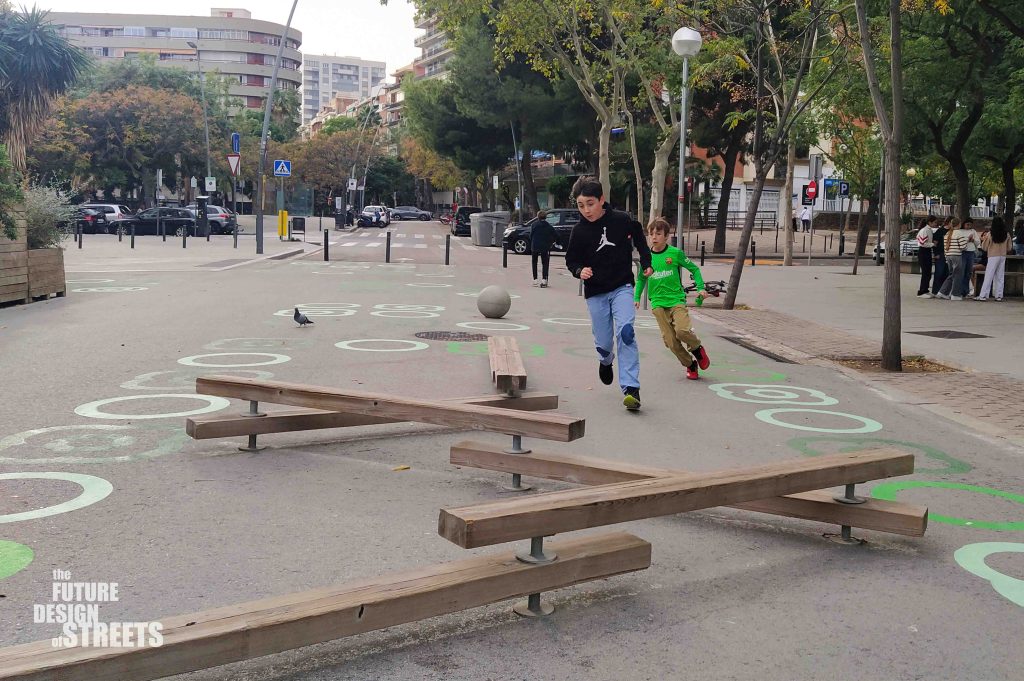
The intervention introduced the complete closure of the street to motorised traffic, redirecting vehicles to parallel routes and allowing the carriageway to be absorbed into the public realm. The redesign incorporates playful and multifunctional elements including pavement graphics, seating areas, trampolines, skating features and shaded spaces intended to encourage physical activity, informal social interaction and independent play.
Landscape and environmental strategies also play an important role within the project. Tree planting, soft landscaping and permeable surfaces contribute to improved microclimatic comfort and environmental quality while supporting spatial differentiation between zones for movement, gathering and rest.
A participatory and child centred design process informed the development of the scheme. Students, families, local residents and community stakeholders contributed to decisions regarding circulation patterns, play infrastructure and spatial organisation. The intervention also strengthens the relationship between the school and the adjacent Plaça del Sòl de Baix, effectively extending the school environment into a broader public landscape that supports independent mobility and outdoor activity.
More broadly, the project forms part of Barcelona’s wider strategy for child centred urbanism and healthy public space. Alongside programmes such as Camins Escolars, Climatic Refuges and Pla del Joc a l’Espai Públic, Protegim les Escoles illustrates how street redesign can support safer, healthier and more socially inclusive urban environments through the integration of schools, public space and active mobility networks.
Photos


Video
Map