Location
Barcelona, Spain
Project
Municipality of Barcelona – Department of Urban Ecology
Programme
‘Superilles’ – Superblocks
Date
2020
Area
9.500 m²
Dimensions
20 m Width; 480 m Length
Surfaces
3.500 m² permeable; 6.000 m² impermeable
Ground floor
45% Commerce; 25% Dwellings; 20% Offices; 10% Others
About
Carrer del Consell de Cent in Barcelona has been transformed as part of the Superilles programme, a city-wide strategy developed by the Barcelona City Council to prioritise pedestrian life, climate resilience and reduced car dependency within the Eixample grid. Previously functioning as a traffic dominated arterial street, the corridor has been reconfigured as a civic urban space centred on local accessibility, environmental performance and social use.
The project is not the work of a single architect, but rather the result of a municipal urban design process led by the Department of Urban Ecology, supported by interdisciplinary teams of urban designers, landscape architects and engineers. Within this framework, the design redefines the street as a continuous public surface rather than a vehicular corridor, restructuring movement patterns while maintaining essential access for residents, services and emergency circulation.
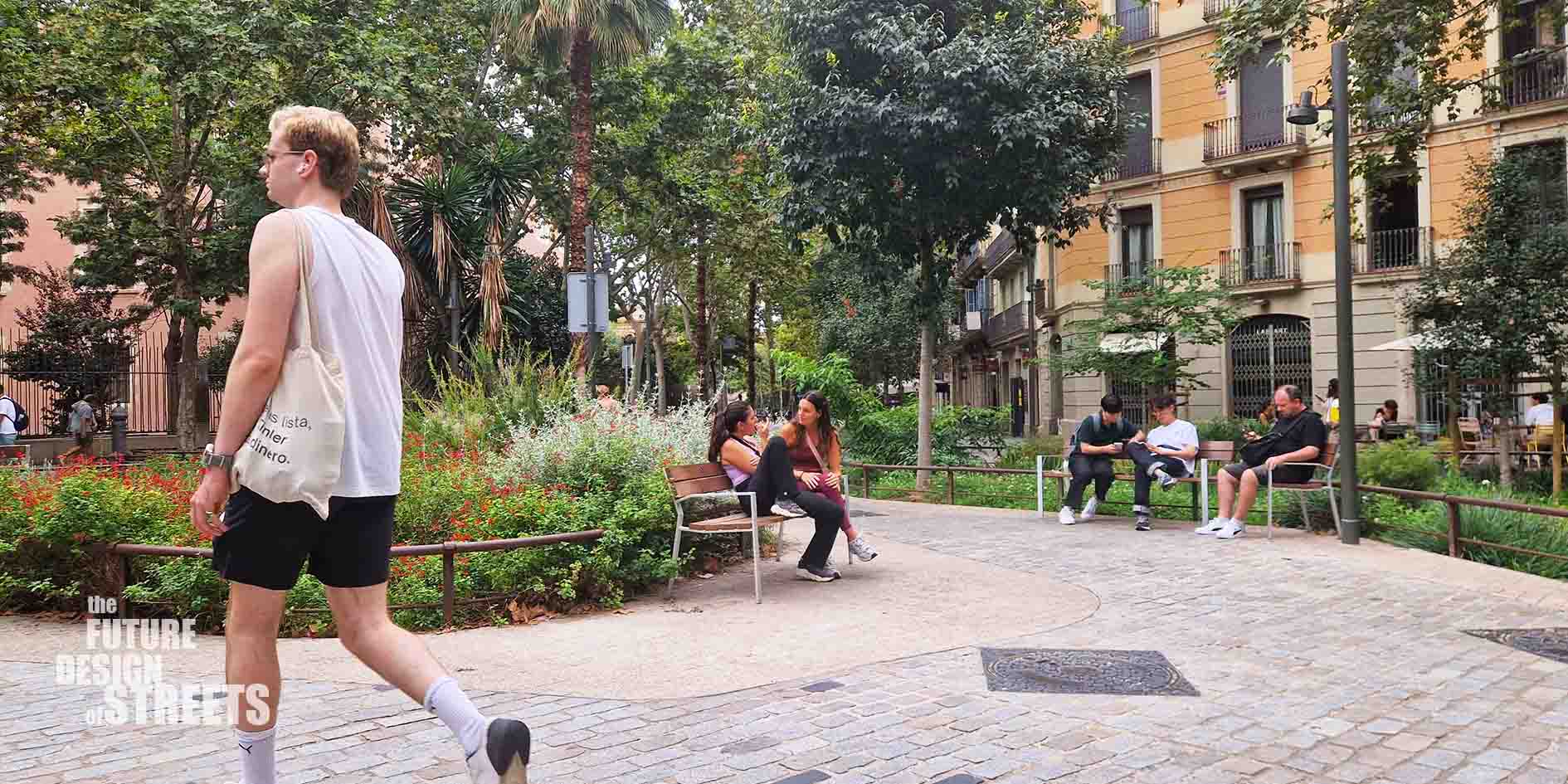
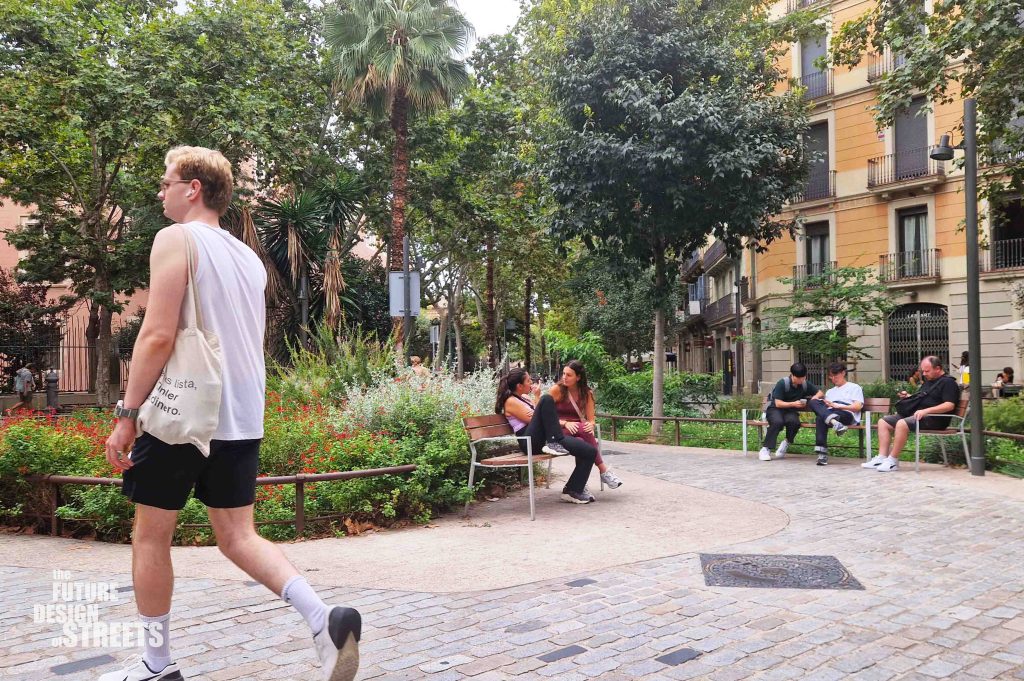
The intervention reduces the dominance of vehicular traffic and reallocates space to pedestrians and cyclists through widened sidewalks, simplified intersections and continuous cycling infrastructure. Street furniture, seating areas and shaded zones are integrated into the spatial organisation, reinforcing the transformation of the street from a transit route into a place of stay and social interaction.
Landscape and environmental strategies play a central role in the redesign. Tree planting, linear vegetation systems and rain gardens contribute to shading, biodiversity and microclimatic regulation, while permeable surfaces improve stormwater infiltration and support broader climate adaptation objectives, including the reduction of urban heat island effects.
At ground floor level, active frontages reinforce the vitality of the street. Retail, cafés and small-scale services engage directly with the public realm, while informal seating, cycling infrastructure and pedestrian priority areas support everyday social interaction. The introduction of small play and rest areas further strengthens the inclusivity of the space, encouraging use across different ages and social groups.
Overall, Carrer del Consell de Cent demonstrates Barcelona’s design-led approach to urban transformation, where mobility restructuring, ecological infrastructure and social activation are integrated into a single coherent framework. The project repositions the street as a resilient and human-centred public space, reinforcing both neighbourhood life and environmental performance within the city’s broader Superilles strategy.
Photos


Map