I mean actually largely remove the cars and reintroduce elements of life: conviviality, interaction, social life, play, culture, commerce, exchange, whatever you think the streets are about.
Dan Hill
Although every street is different, a set of regular uses and activities are very common on streets, like mobility movements, walking and all kinds of transport modes (a place to move). Activities such as meeting, talking, watching, and sitting also form part of an everyday street scene (a place to meet, to stay). In certain streets, such as residential or garden streets, gardening is a daily or weekly activity (a place for gardening). Many streets, in central areas or neighbourhoods, function also for special sport or cultural events (a place to play & sport, a place to celebrate).
It is important to distinguish daily activities and uses, which should be by default integrated into every street design, and more temporary or periodic activities and events. Municipalities always play a key role in this. By applying specific strategies, regulations and programmes, measurements can be put into practise, such as opening streets for
children or including certain activities in specific street types.

A Place to Stay
Streets are part of the public space and are therefore spaces of social interaction, to meet others, to gather and to stay. Streets are places of exchange and friction.
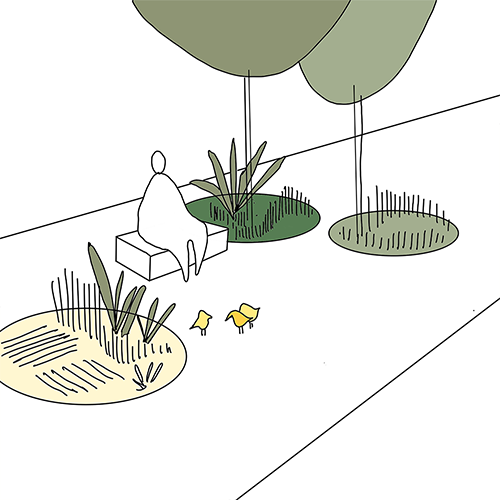
A Space for Gardening
Streets that include space for small (private or public) gardens, pocket parks or trees turn space into a place for gardening. This can be organised in a private or public manner, but also in groups or collectives.

A Place to Celebrate
Streets can also function as a place for celebration, like for various cultural, neighbourhood or religion events. In some cases, a street market can gather various activities of celebration.

A Place to Move
Streets are important spaces for all kinds of mobility movements and flows. Main streets combine larger – city or regional – mobility flows with local accessibility. Residential streets serve local accessibility for pedestrians, cyclists, and car drivers/passengers.
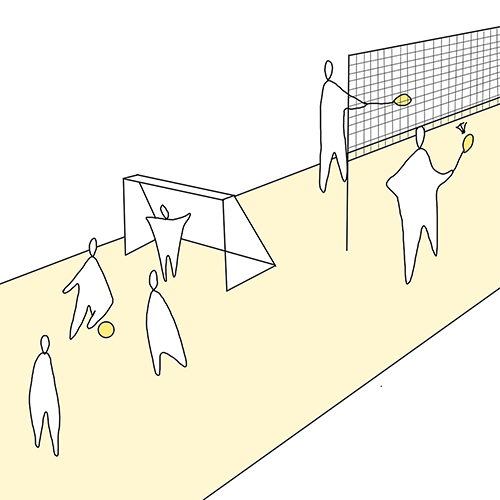
A Place to Play & Sport
Street networks form the largest sports space in many cities. Although not designed and organised for sport, streets can easily be used for running and cycling. With some street adaptation, many spaces can temporarily be transformed into play and sport fields.

A Place to …
Streets form a platform for urban life. It is the public space for regular, common, daily activities, of all kinds. The spectrum of possibilities is endless. Street designs that have a certain degree of flexibility and adaptability can offer spaces for, up to this moment, unknown activities.