
Location
Barcelona, Spain
Project
Barcelona City Council’s Urban Ecology Department + IMPU + 22@ Municipal development agency
Programme
Green Axes 22@ + Urban Regeneration Strategy
Date
2017 (pilot framework); Construction 2021–2023
Area
16.800 m²
Dimensions
20 m Width; 760 m Length
Surfaces
4.800 m² permeable; 12.000 m² impermeable
Ground floor
58% Commerce; 28% Offices; 14% Dwellings
About
Carrer de Sancho de Ávila, located in the Sant Martí district of Barcelona, forms part of the wider transformation of the 22@ innovation district, a major urban regeneration programme initiated by the Barcelona City Council to convert former industrial land in Poblenou into a mixed-use urban fabric combining housing, economic activity and public space.
The transformation is part of the Eixos Verds 22@ strategy, which establishes a network of green and pedestrian prioritised streets intended to improve connectivity between the coastline and the inner city. The programme is led by the Department of Urban Ecology in coordination with the 22@ municipal development structure and implemented through phased public works and multidisciplinary technical teams.
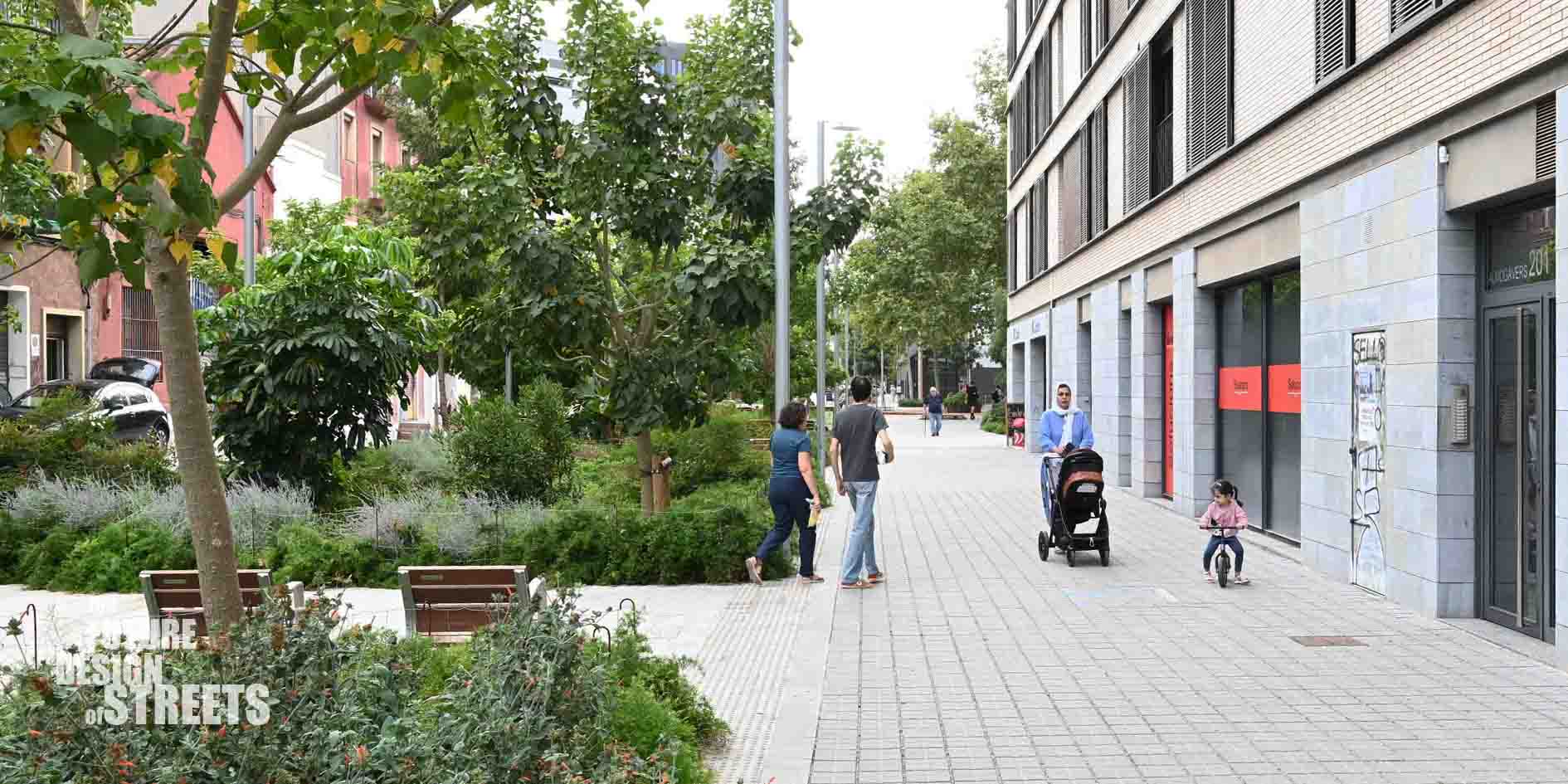
The redesign is based on the Superilla principles, reorganising street hierarchy to prioritise pedestrians and cyclists over private vehicles. The new section introduces segregated cycle lanes, widened pavements and continuous green infrastructure, including tree rows and planted buffers that enhance shading, comfort and microclimatic performance.
At key intersections, small urban plazas are integrated into the street system, incorporating seating, play elements and fitness equipment. These spaces support informal social interaction and intergenerational use, reflecting Barcelona’s “Ciutat Jugable” (Playable City) strategy, which promotes everyday playability as a component of public space design.
Environmental performance is reinforced through increased permeable surfaces, stormwater infiltration systems and urban greening strategies that contribute to heat reduction and improved air quality. The integration of vegetation and shaded areas enhances thermal comfort and strengthens the ecological performance of the corridor.
Rather than being attributed to a single architect, Carrer de Sancho de Ávila is the result of a municipal, evidence-based urban transformation process led by the City of Barcelona. The project demonstrates how former industrial streets can be reprogrammed into climate-adaptive, inclusive and socially active public spaces, integrating mobility, ecology and urban life into a coherent contemporary urban system.
Photos




Map