Tactical urbanism can be a tool for advocacy and systemic change with the aim to create liveable public space and streets for everyone.
Giulia Sicignano
In these contemporary dynamic times, amongst different types of political, economic and health, it is important to look and rethink about the existing urban space, including the current very static use and spatial organisation of streets, considering the plurality of inhabitants that live in the cities. Creating temporary or periodical conditions to enlarge social activities, for better local use of streets and to promote mobility of proximity, will also improve social inclusiveness and contribute to a more sustainable public space.
Reversible interventions can help to imagine different street uses and show that street transformation can be done relatively fast, lightly, and at a low cost. The recent sanitary crisis demonstrated the agility of many cities to act in a simple and effective manner, making use of the available temporary unnecessary space for cars.
Reversible street interventions – as recently shown in the Covid-19 period – might look new, many street activities, as for example weekly street food markets and yearly music events, already form a part of the public space programming of municipalities.Potentially these reversible approaches can be applied in many other streets, in central areas or in neighbourhoods.
There are many forms in which to intervene in streets with one-time or periodic activities and uses. Actions can be in line with placemaking events or actions, within an experimental approach of tactical urbanism (implementing pilots of temporary public space or mobility intervention on the ground) or as a part of a long-term transformation process. Making use of different urban rhythms and demands in time and integrating these in street design can open a new range of possibilities. This can be made physically (permanent signs, plug-and-play objects, adaptable urban furniture) or digitally (dynamic traffic system, technological modular components, rent-a-street-space by a municipality app as for example a play street or for neighbourhood event).
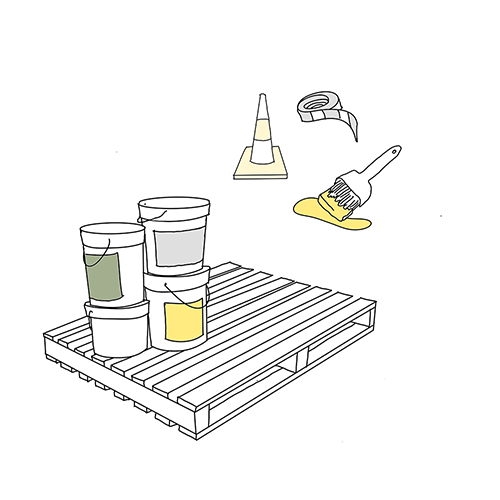
Paint & Tape
Street use can be changed rapidly and easily using paint and tape for temporary events. This can be made in major city events, or organised on a neighbourhood level. The recent sanitary crisis showed us, ona big scale, the power that reversible approaches or tactical urbanism can have:quick, light, and cheap.
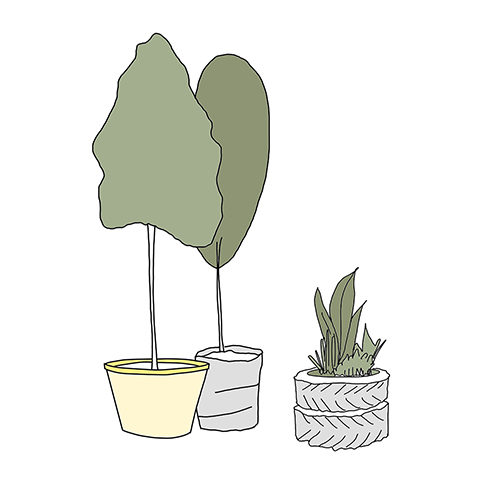
Plug-in Components
Some light construction or movable urban furniture, like parklets, can introduce conditions for social meeting points, sport, sitting places or bringing tree/plant-pots into streets. With local communities, new uses can be explored by experimental projects. After positive results, the pilot phase can be turned into a more permanent intervention.
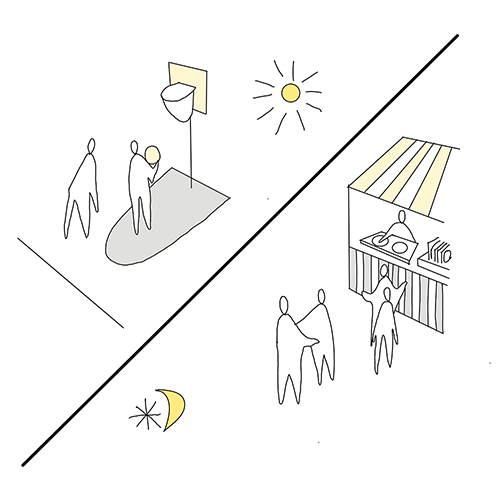
Day Rhythm
Streets can be (temporarily) used differently along the various moments of a day, week or month. The logic of shopping and school streets can be applied on a range of other urban streets.
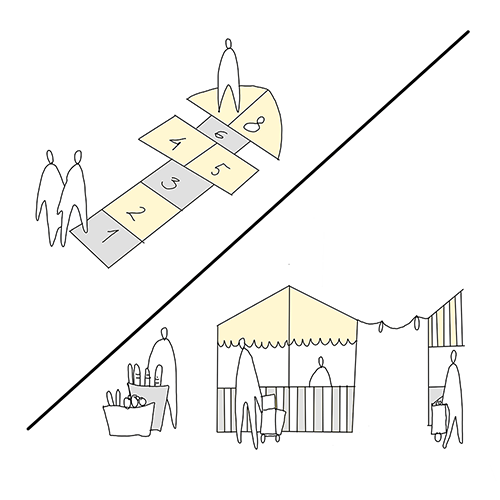
Room for Events
Periodical events, from a play street to a music concert, need a certain basic infrastructure (electricity, traffic controlling objects, security service, etc.). This can be designed in an ambulant manner or can be part of the foundational design of streets.
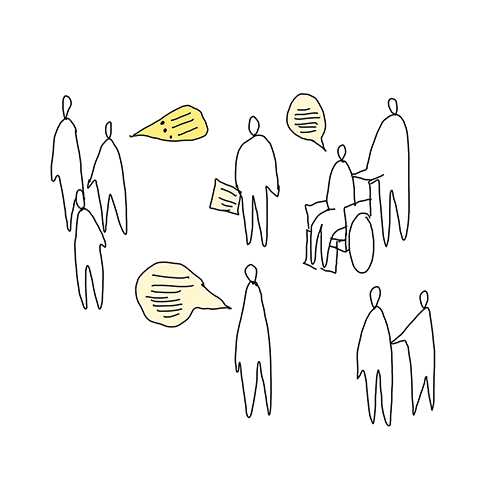
Involvement
Improving existing streets means to involve local communities and existing social, cultural and economic structures. Temporary street projects can help discover adequate and site-specific reversible approaches that improve the local living conditions.
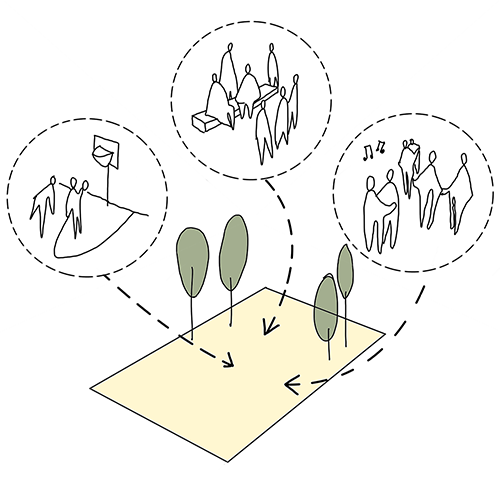
Open Space
Street spaces should have a certain degree of openness to unforeseen uses and activities. Besides some flexibility and the possibility to facilitate (temporary) adaptations, this opens also another look to design streets with a non-specific-function approach.