
Location
Copenhagen, Denmark
School
Tove Ditlevsens Skole Mellemtrin
Programme
Hjertezoner – “Heart-zones”
Project / Design
Municipality of Copenhagen + Bascon Landscape
Date
2016
Area
2.500 m2
Dimensions
20 m Width; 100 m Length
Surfaces
400 m2 permeable; 2100 m2 impermeable
Ground floor
50% School; 35% Dwellings; 15% Commerce
About
Located in the Vesterbro district of Copenhagen, Tove Ditlevsens Plads occupies a triangular urban block between Enghavevej, Matthæusgade and Frederiksstadsgade. The project forms part of the broader Områdefornyelsen Centrale Vesterbro urban renewal programme, which focuses on improving public space, integrating school environments, increasing green and play oriented areas, and strengthening local identity and social belonging.
Commissioned by the Municipality of Copenhagen and designed by Bascon, the intervention reconfigures the square as a shared civic landscape combining educational, recreational and neighbourhood functions. The project emerged from the need to provide additional outdoor space for Tove Ditlevsens Skole while simultaneously opening the school environment to the surrounding city. Rather than maintaining a strict separation between school grounds and public space, the design establishes a porous relationship between institutional and urban life.
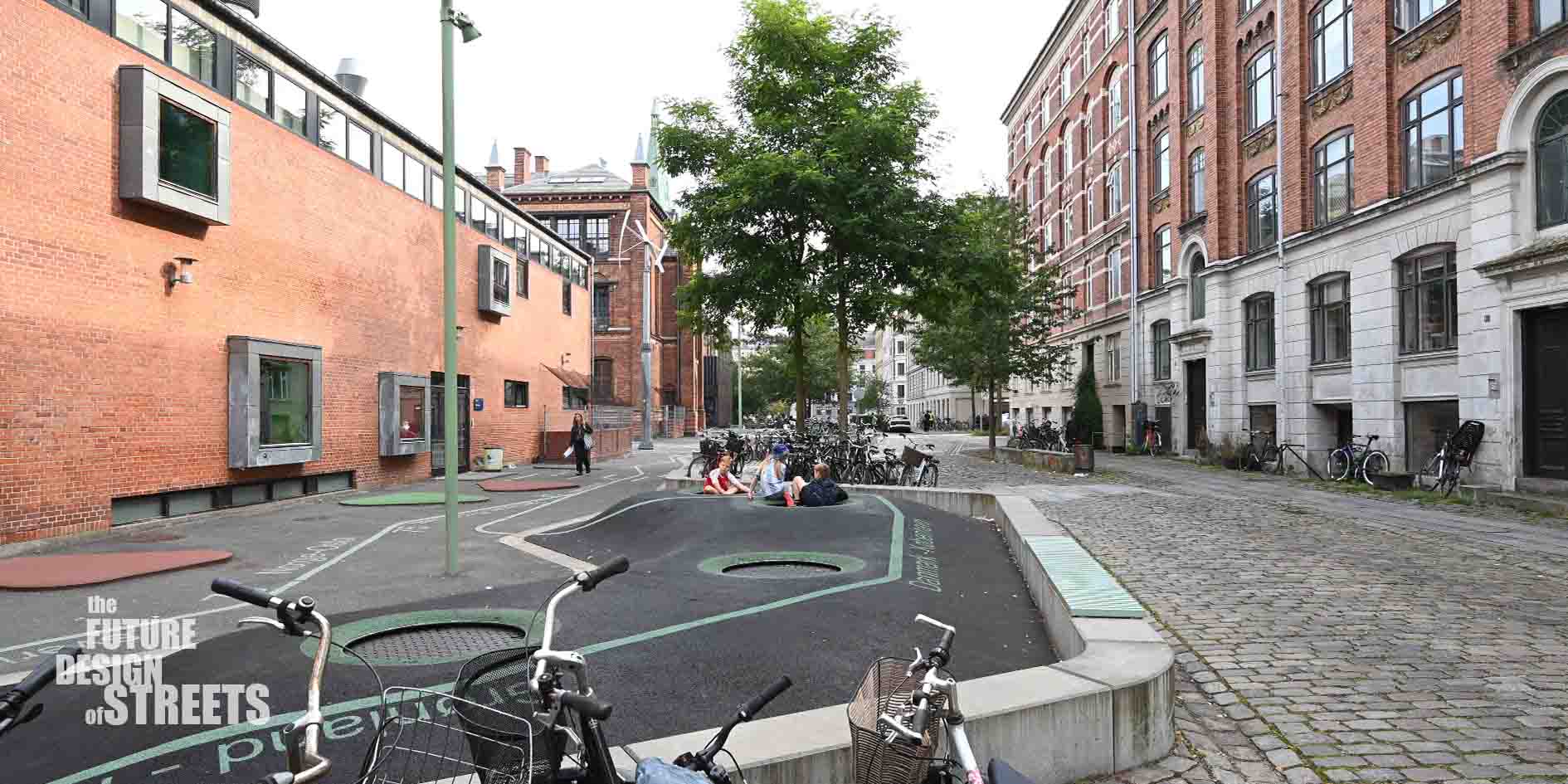
The spatial composition is organised through differentiated zones accommodating transit, play, movement and quieter areas for rest and social interaction. Green and recreational elements include trampolines, skate features, hanging tree hammocks and soft landscaped areas, while painted “green lines” across the asphalt encourage movement and informal play. By diverting through traffic and introducing permeable surfaces, trees and planted areas, the project improves local microclimatic conditions while encouraging walking, cycling and outdoor activity.
Photos


Map