Location
Copenhagen, Denmark
Project / Design
Copenhagen Municipality
COBE
Programme
Nordhavn Local Plans
Date
2025
Area
12.000 m²
Dimensions
9.6 m Width; 1.250 m Length
Surfaces
3.000 m² permeable;
9.000 m² impermeable
Ground floor
50% Commerce; 40% Dwellings; 10% Offices
About
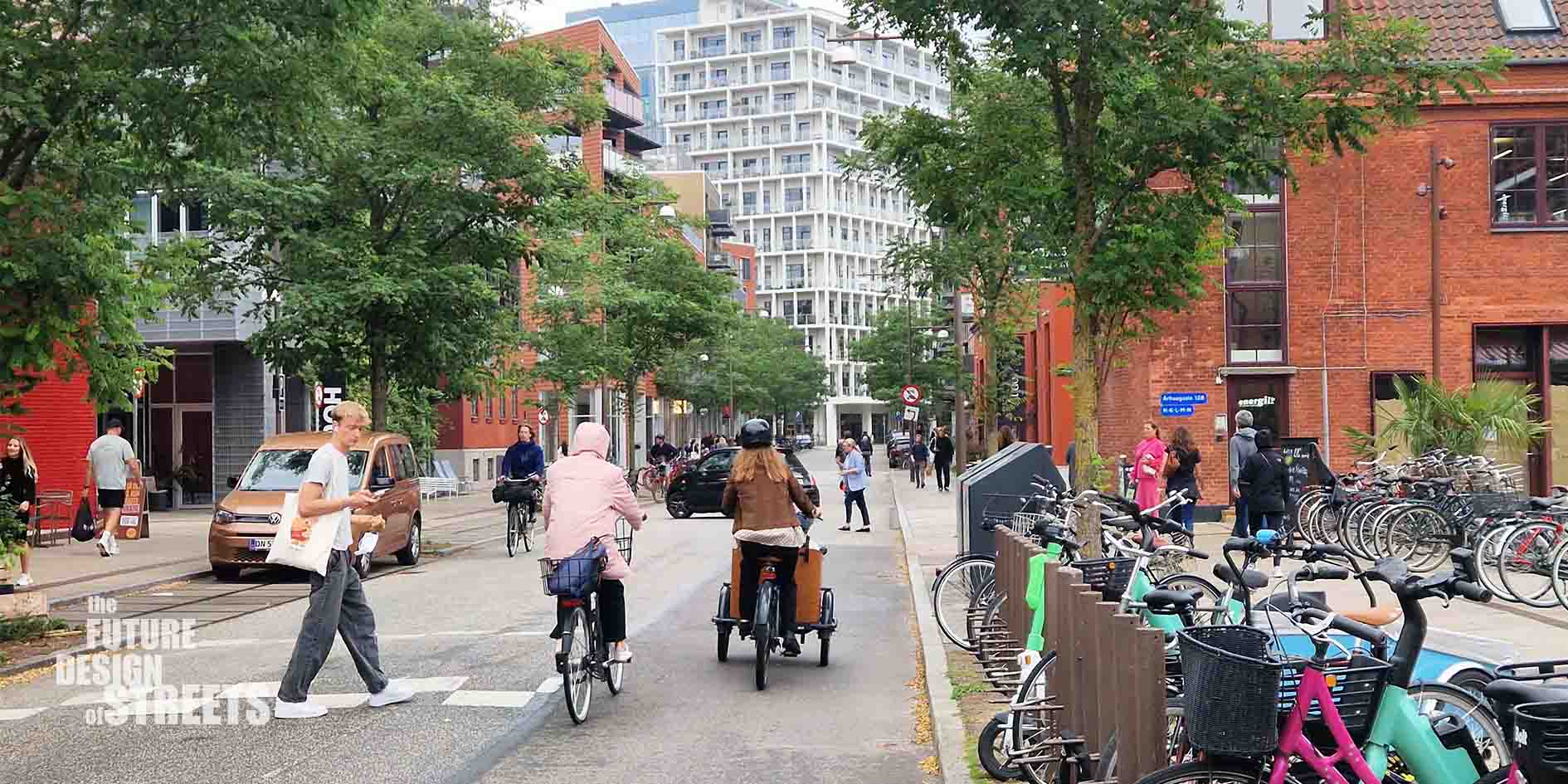
Århusgade, located in the Østerbro district of Copenhagen and extending into the redeveloped Nordhavn area, forms part of a major urban transformation of the former harbour edge into a dense, mixed-use and climate-adaptive district. Historically an industrial and port-adjacent street, it is now embedded within the Århusgadekvarteret, a key redevelopment zone characterised by the integration of former warehouse structures with new residential and commercial development.
The transformation of Nordhavn is guided by a masterplan originally developed by Cobe for the Copenhagen, establishing a long-term framework for land use, mobility structure, building typologies and public space networks. Within this structure, Århusgade is defined as a primary urban spine, concentrating active ground-floor uses such as retail, cafés and services, while upper floors accommodate housing and offices.
The street design prioritises pedestrian and cycling movement over vehicular circulation, introducing widened pavements, continuous cycling infrastructure, seating zones and tree-lined edges.
The spatial reconfiguration strengthens the public realm as a place of stay rather than a transport corridor, supporting local commerce and everyday social interaction within a high-density urban environment.
Environmental strategies include permeable surfaces, integrated stormwater management and green infrastructure elements that enhance drainage capacity, microclimatic comfort and urban resilience. These measures are part of Copenhagen’s broader climate adaptation strategy, particularly relevant in waterfront redevelopment areas such as Nordhavn.
Rather than being attributed to a single architect, Århusgade is the result of a municipality-led planning and implementation process, developed within a masterplan framework and realised through multidisciplinary design and engineering teams. The project demonstrates how former industrial harbour streets can be transformed into active, mixed-use and climate-responsive urban spaces, integrating mobility, ecology and social life within a coherent urban system.
Photos


Map