
Location
Barcelona, Spain
Project
Barcelona City Council’s Urban Ecology Department
Programme
Urban public space regeneration and sustainable mobility strategy – “Eixos Verds”
Date
2009 – 2015
Area
72.000 m²
Dimensions
50 m Width; 760 m Length
Surfaces
30.000 m² permeable; 42.000 m² impermeable
Ground floor
45% Commerce; 25% Dwellings; 10% Offices; 10% Other
About
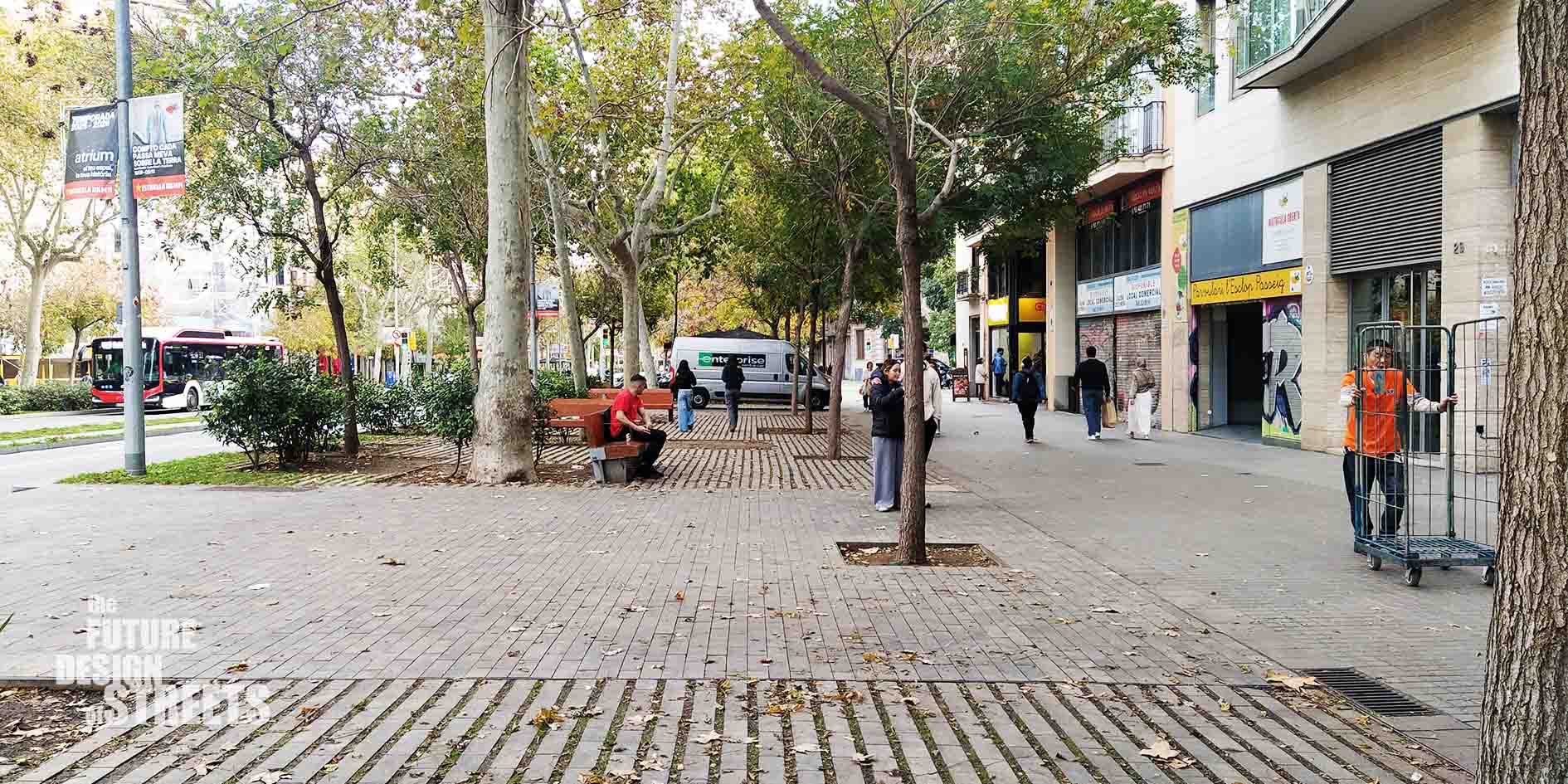
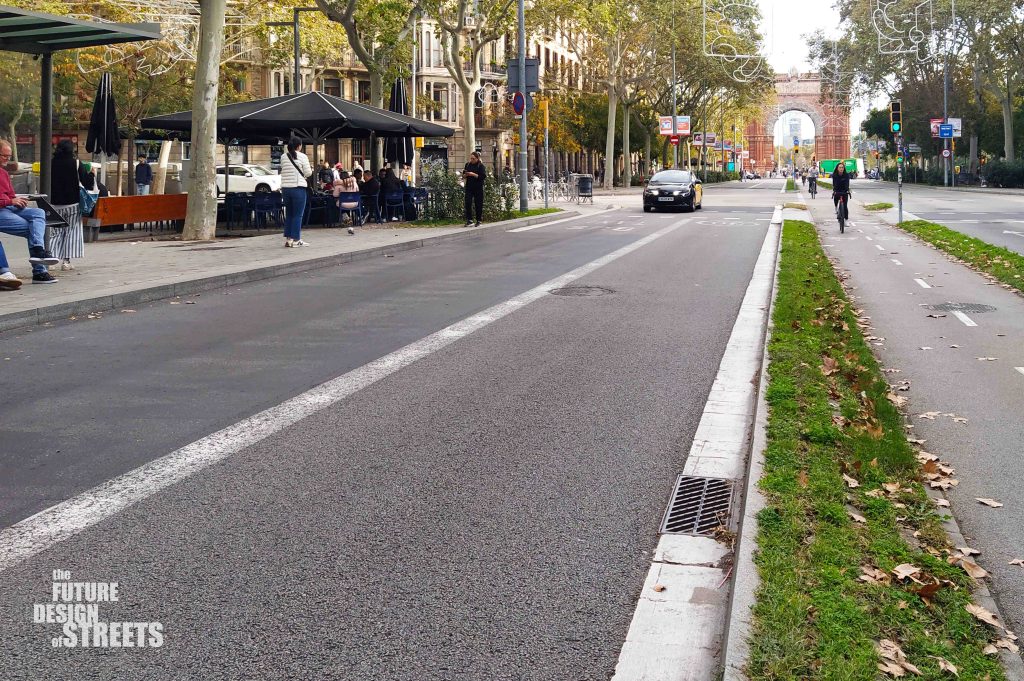
Passeig de Sant Joan in Barcelona has undergone a significant transformation that reflects the city’s long-term commitment to integrating mobility, ecology and public life within its urban fabric. Originally conceived in the nineteenth century as part of the Eixample expansion, the boulevard functioned for decades as a wide, traffic-oriented corridor with limited spatial quality for pedestrians. Its redevelopment repositioned it as one of Barcelona’s most influential contemporary boulevard transformations, prioritising environmental performance and social use while reducing the dominance of motor vehicles.
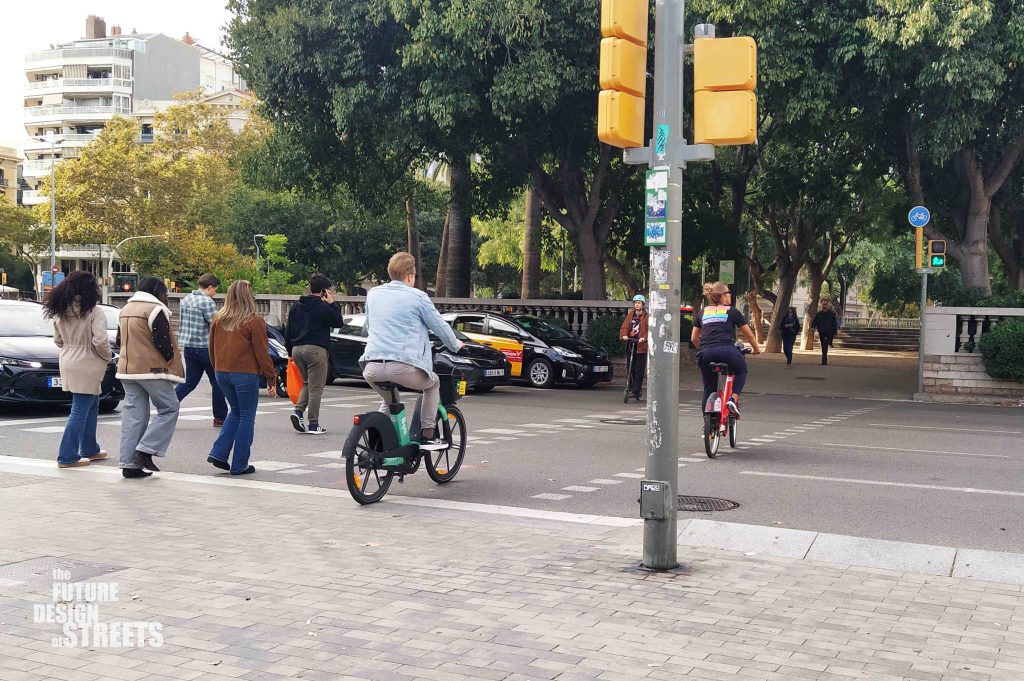
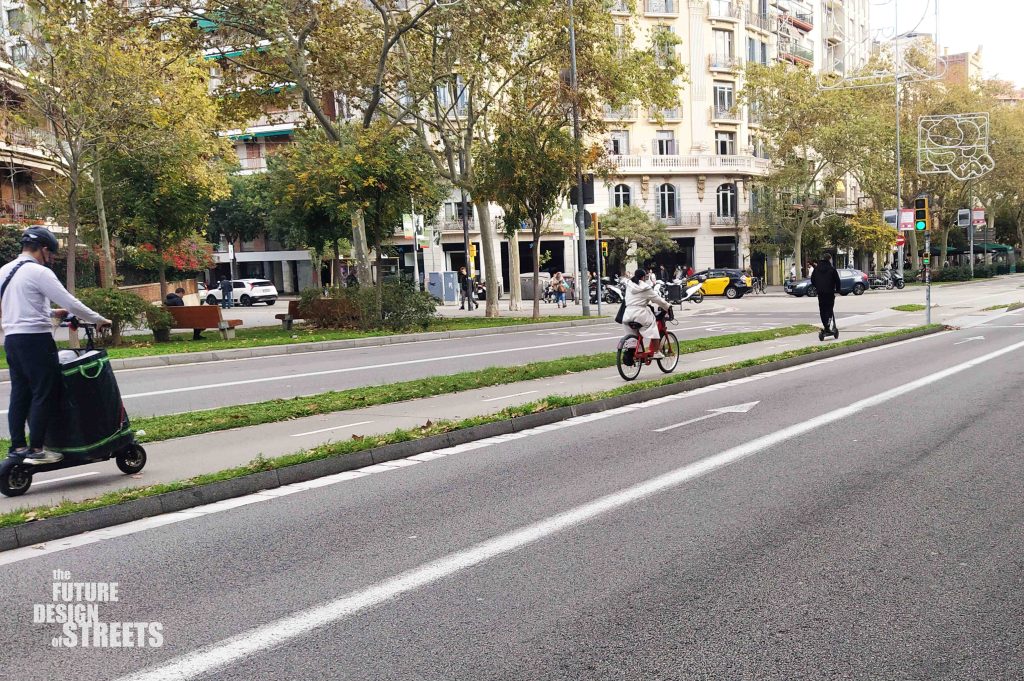
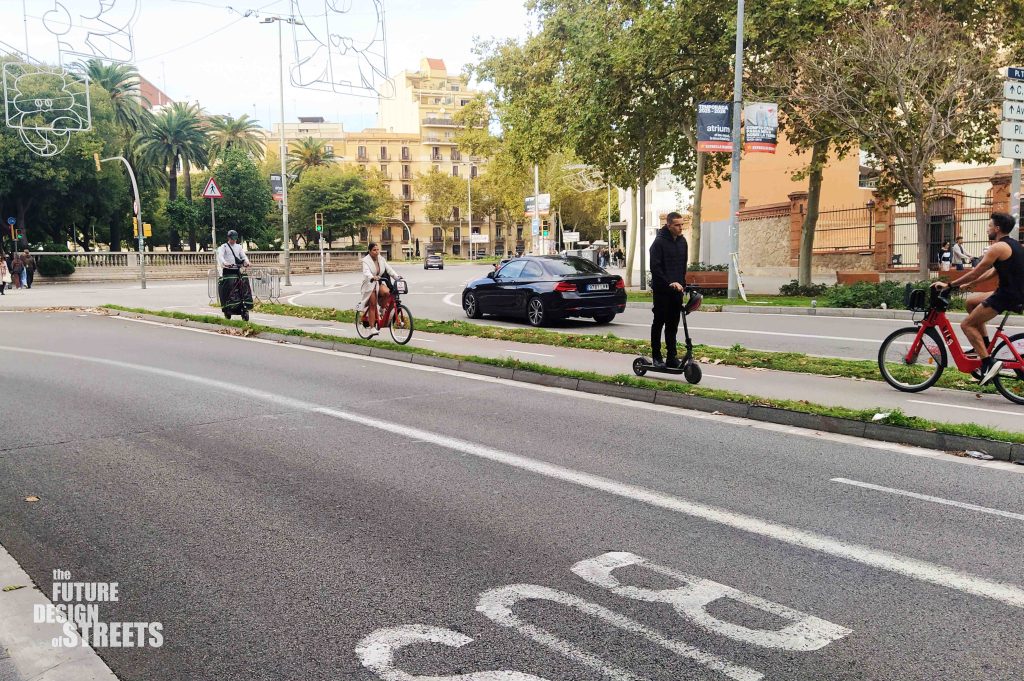
Led by the Barcelona City Council between 2009 and 2014, the project sought to transform the avenue into a continuous ecological and social axis, strengthening connections between the Eixample, Gràcia and the city’s wider network of public spaces. The redesigned section extends for approximately 1.2 kilometres, redistributing street space to accommodate generous pedestrian areas, a segregated bidirectional cycle lane and a reduced carriageway.
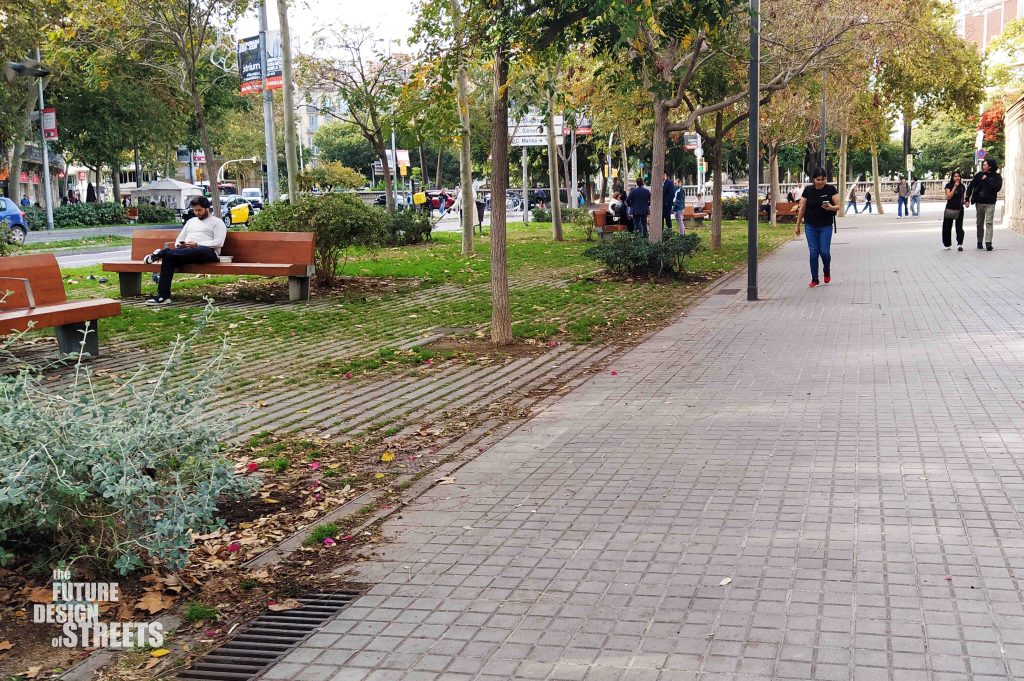
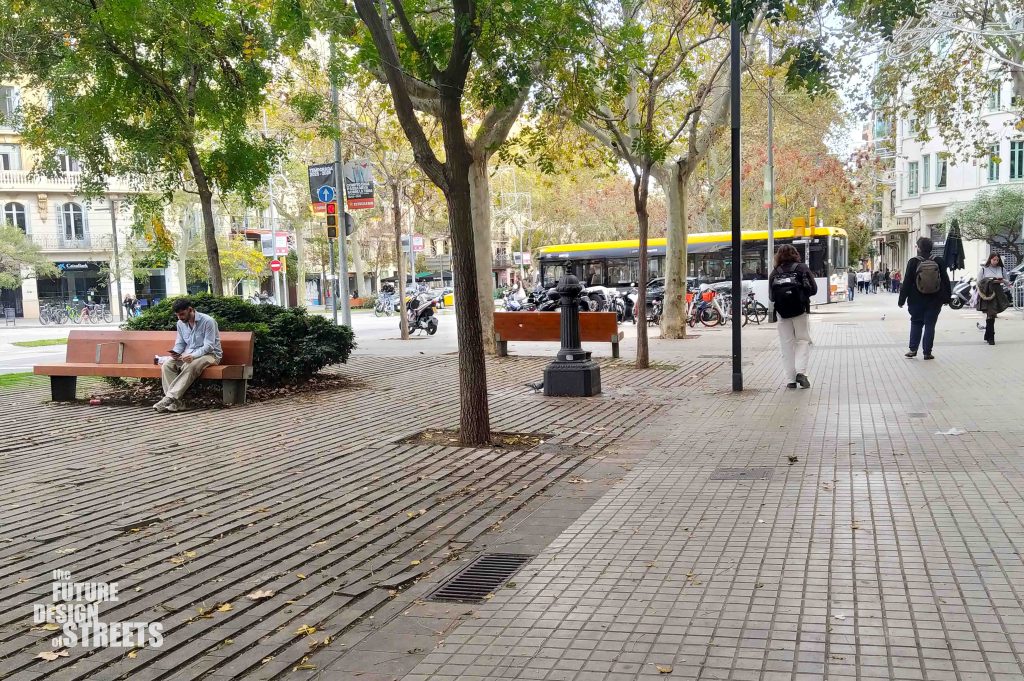
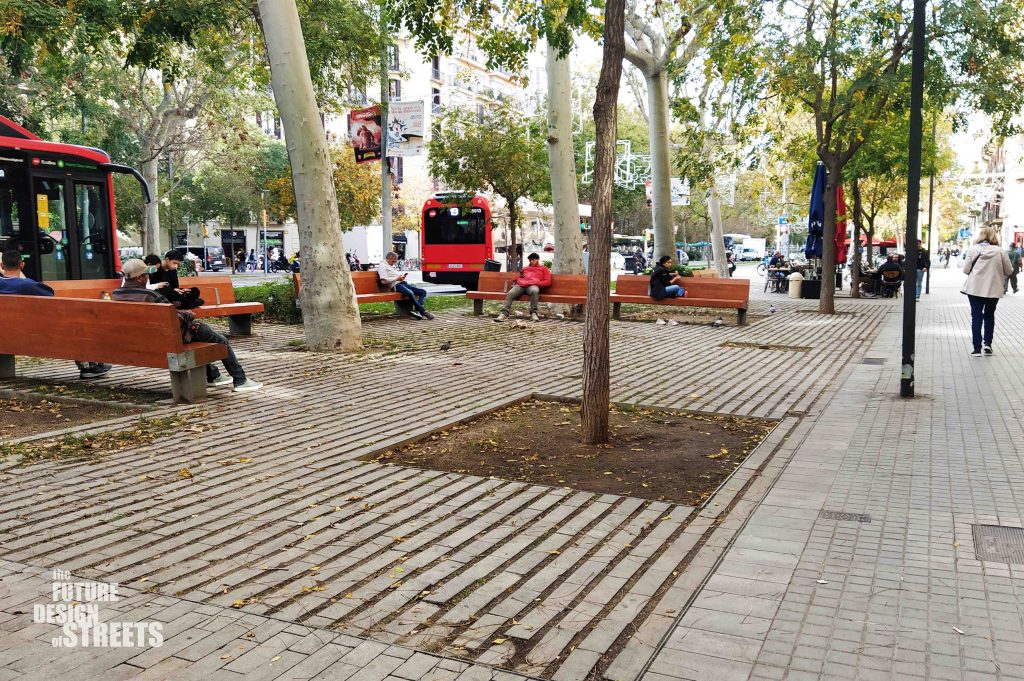
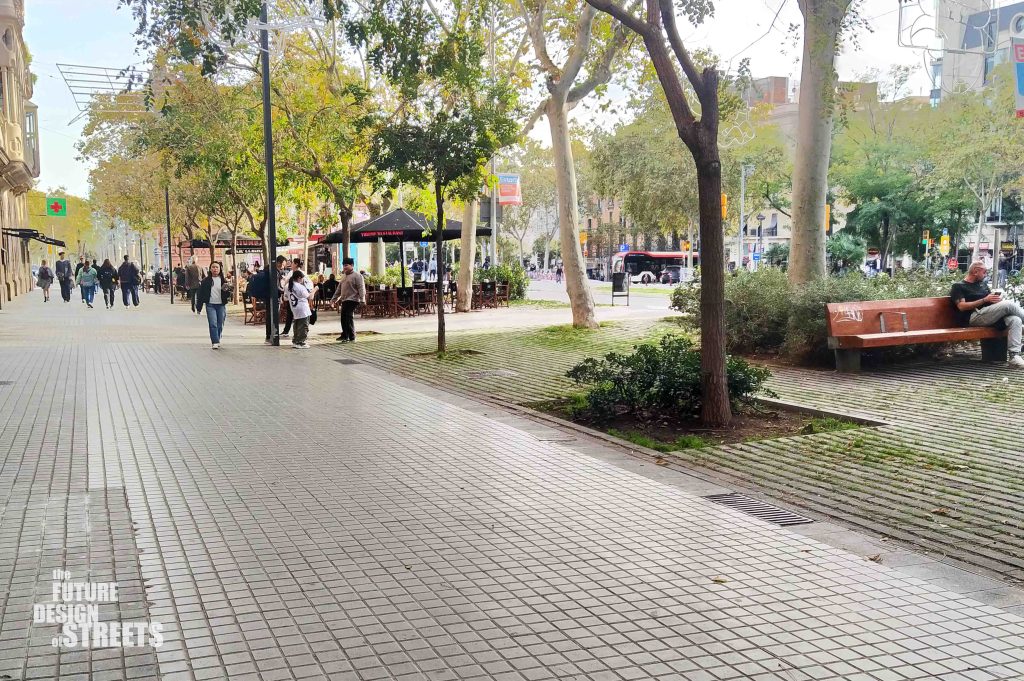
A key feature of the intervention is the expansion and reorganisation of the sidewalks, which were widened from approximately 12.5 metres to around 17 metres. These generous pedestrian areas support a variety of uses, including walking, leisure, children’s play spaces and outdoor terraces. The boulevard incorporates a layered landscape strategy inEnvironmental performance plays a central role in the project.
The introduction of permeable and mixed paving systems, combined with advanced drainage and irrigation solutions using groundwater, allows the street to function as part of Barcelona’s climate adaptation strategy. These interventions improve stormwater management, support vegetation health, and contribute to cooling the urban microclimate during periods of high temperatures.
The boulevard’s spatial reconfiguration also enhances its social and economic vitality. Ground-floor uses, including cafés, shops, and local services, are supported by increased pedestrian activity and improved public space quality. Recreational zones, seating areas, and open spaces encourage lingering and interaction, transforming the boulevard into a linear public park rather than a transit corridor.
The overall effect is a profound shift in urban experience. Passeig de Sant Joan now operates as a multifunctional green axis, balancing mobility, ecology, and public life. It demonstrates Barcelona’s capacity to implement large-scale, design-led urban transformation, where infrastructure is reimagined as a living system that supports environmental resilience, social interaction, and economic activity.
In essence, the project stands as a benchmark for contemporary boulevard design, illustrating how historic urban structures can be adapted to meet the challenges of climate change and evolving patterns of urban life while reinforcing the identity and continuity of the city.
Photos
Map