Location
Tirana, Albania
Schools
Shkolla Gustav Mayer; Shkolla Naim Frashëri; Garden N.26; KinderGarden
Project
Municipalitly of Tirana in collaboration with Qendra Marrëdhënie
Programme
Rruget Per Femijet – “Street for Kids”
Date
2022
Area
~962,753 m²
Dimensions
–
Surfaces
~99% impermeable; planted 25 trees
Ground floor
89% Dwellings; 10% Schools; 1% Commerce
About
In 2022, the Municipality of Tirana, in collaboration with Qendra Marrëdhënie, implemented the first permanent school street in the city, located in front of Edith Durham School. This intervention addressed both traffic safety and broader social challenges in the neighbourhood, where fast-moving vehicles, lack of pedestrian infrastructure, and limited public space previously undermined children’s safety and community well-being.
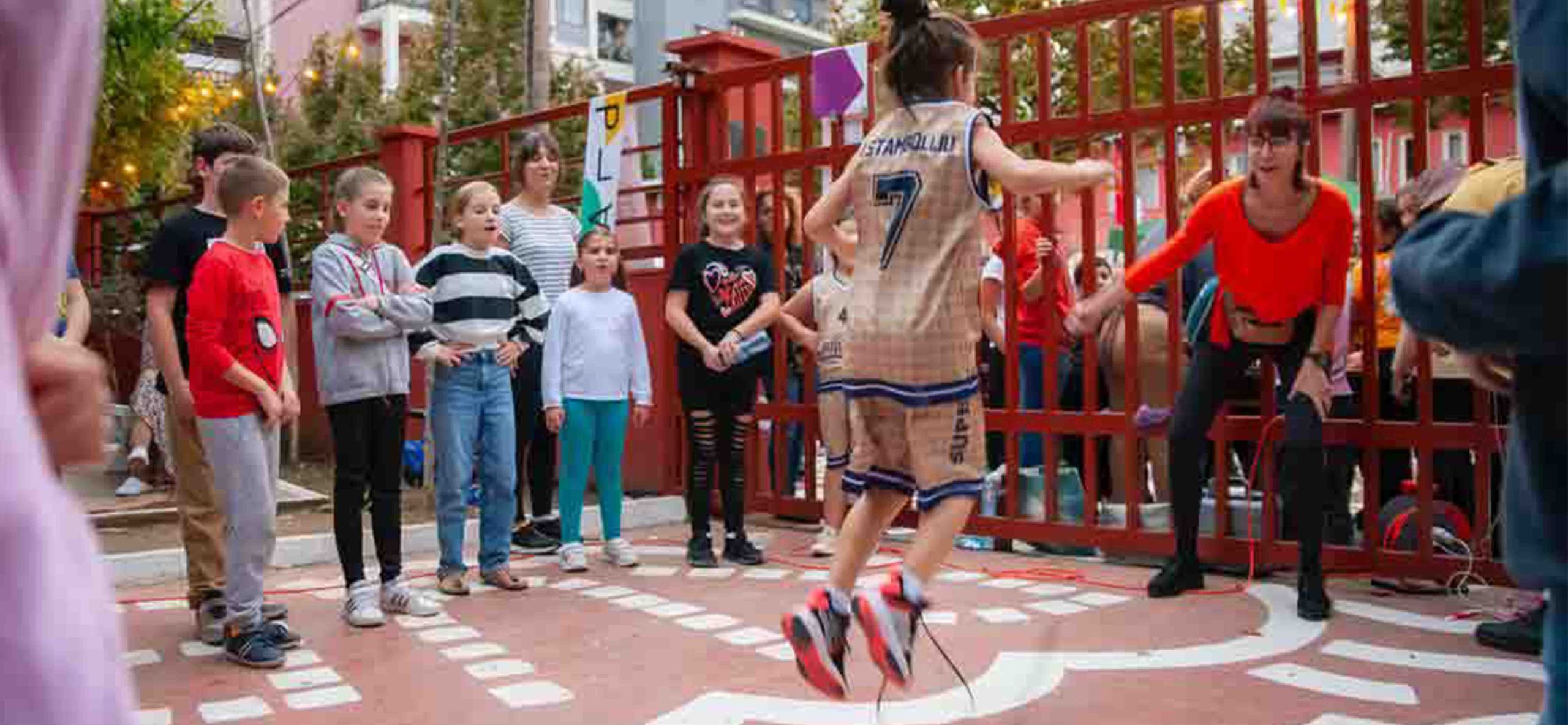
The project eliminated one of the two vehicular lanes, extending the sidewalk and reallocating space for pedestrians, children, and cyclists. This redesign significantly reduced traffic volumes and vehicle speeds, creating a safe, inclusive, and child-friendly environment. Playful and multifunctional elements—pavement graphics, colourful ground patterns, seating, shaded areas, and green infrastructure—were introduced to encourage active mobility, outdoor play, and social interaction. The street now serves as an extension of the school environment, supporting both play and outdoor learning activities.
A child-centred and participatory approach was fundamental to the project. Students were actively involved in the design process, choosing colours, patterns, and drawings for the pavement, which fostered a sense of ownership and civic identity. Teachers, parents, and local residents also participated, helping ensure the space reflected community needs and strengthened social ties.
This intervention forms part of a wider “School Block” concept developed by Qendra Marrëdhënie, which extends safety improvements beyond a single frontage. The School Block connects several educational facilities—including a crèche, a kindergarten, and a primary school—through a network of calmer, pedestrian-priority streets.
This approach transforms the surrounding urban fabric into a continuous child-safe zone, allowing students of different ages to walk, play, and move independently between institutions. It redefines the relationship between education and the city, making learning environments more open, accessible, and socially integrated.
The results have been substantial. Traffic volumes decreased by 59% during school hours, and vehicle speeds dropped considerably. The street has become a place where children play and gather after school and on weekends, reinforcing its role as a community space. Moreover, the intervention reflects the goals of Tirana’s Walking Policy (2022), which prioritises walking as a key mode of transport—especially important in a city where many women do not own cars and rely on walking as their main form of mobility. Studies show that 66% of women in Tirana walk more than half of all their trips, making safe, well-designed pedestrian spaces crucial for daily life.
By aligning the School Block and Walking Policy frameworks, the Edith Durham School Street demonstrates how urban design can address not only safety and mobility but also gender equity, health, and social inclusion. It exemplifies a model of urban transformation that reclaims streets as educational, social, and civic spaces—where children’s needs and voices shape the future of the city.
Photos


Map