Location
Porto, Portugal
Project
Porto Municipality
Programme
“Rua Direita” – Municipal Programme
Date
2024
Area
~6.500 m²
Dimensions
~ 13 m Width; ~ 500 m Length
Surfaces
~1.500 m² permeable; ~5.000 m² impermeable
Ground floor
50% Dwellings; 35% Commerce; 10% Offices; 5% Other
About
Rua da Paz in Porto has been the focus of gradual urban improvements that reflect the city’s broader commitment to pedestrian comfort, mobility, and environmental quality within dense neighbourhoods. Historically a narrow local street in the Bonfim district, it primarily functioned as a conduit for vehicular traffic, with limited pedestrian space and minimal public realm amenities.
The intervention, coordinated by the Câmara Municipal do Porto, is part of the municipal “Rua Direita” Public Space Rehabilitation Programme (2018–ongoing). This programme aims to rehabilitate historic streets across Porto, improving accessibility, safety, and public space quality while integrating incremental climate adaptation measures.
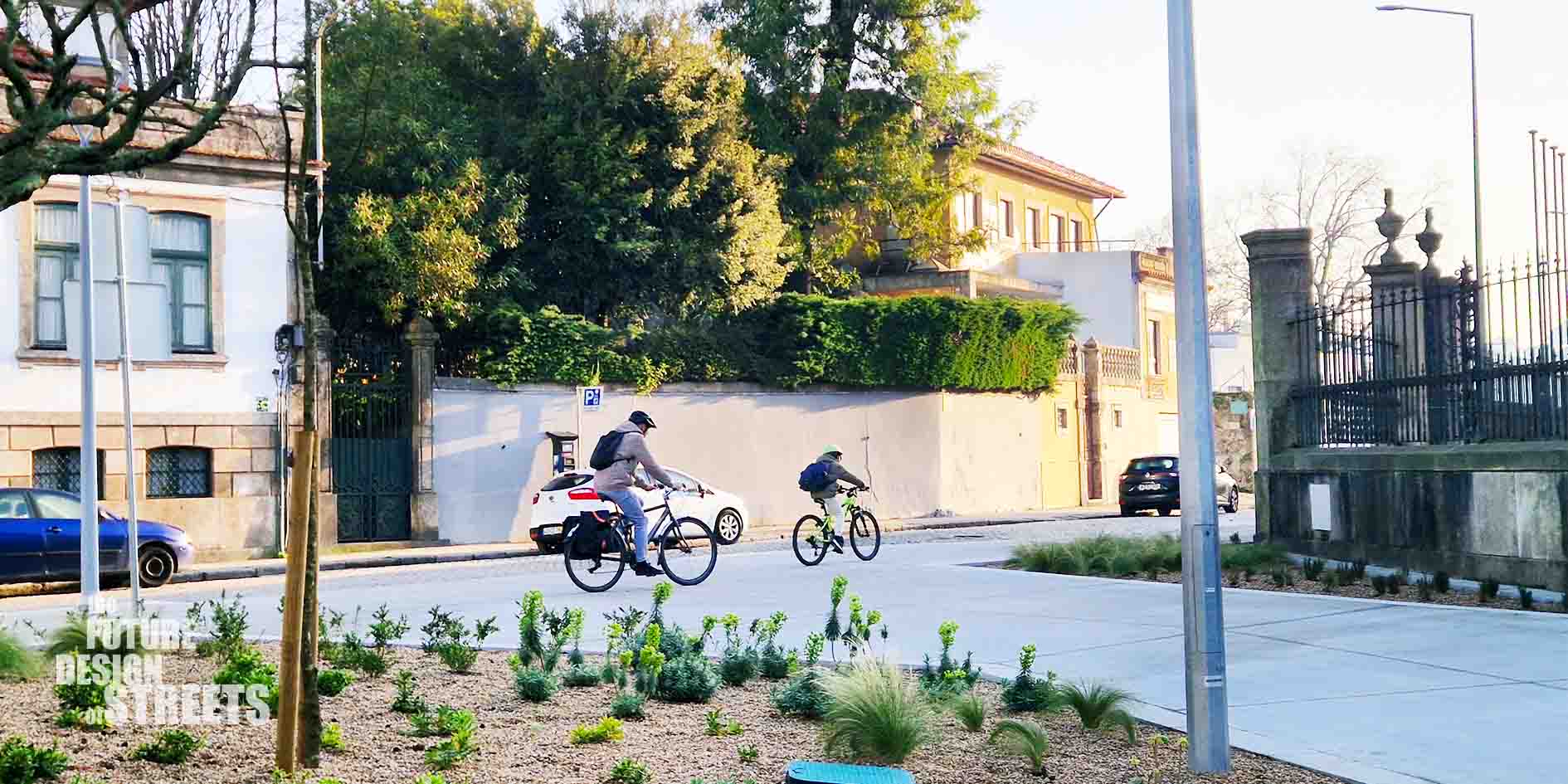
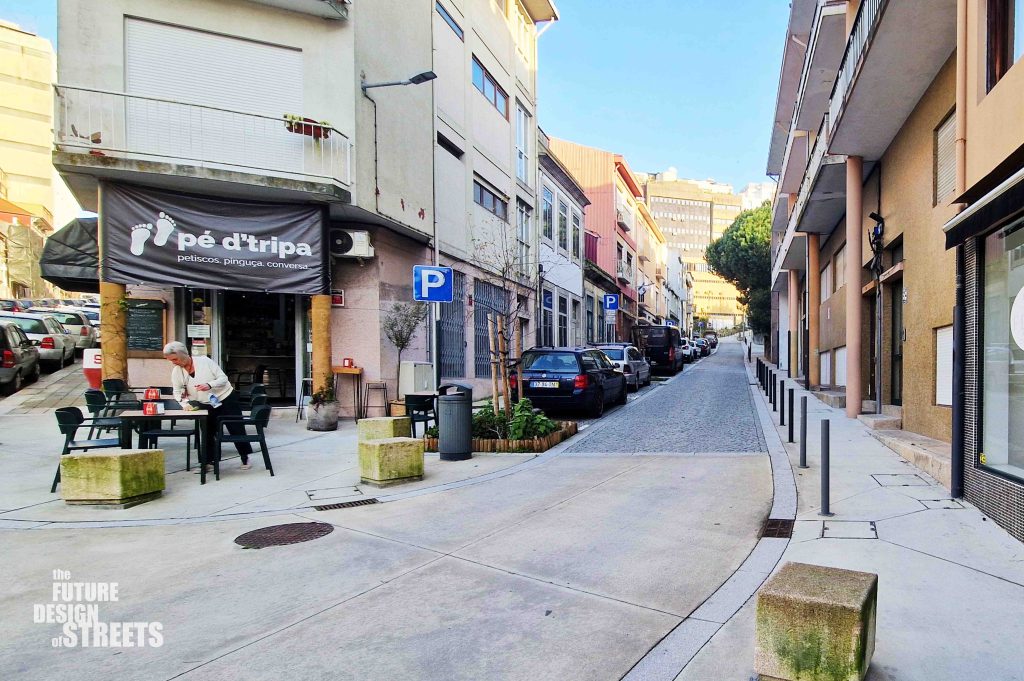
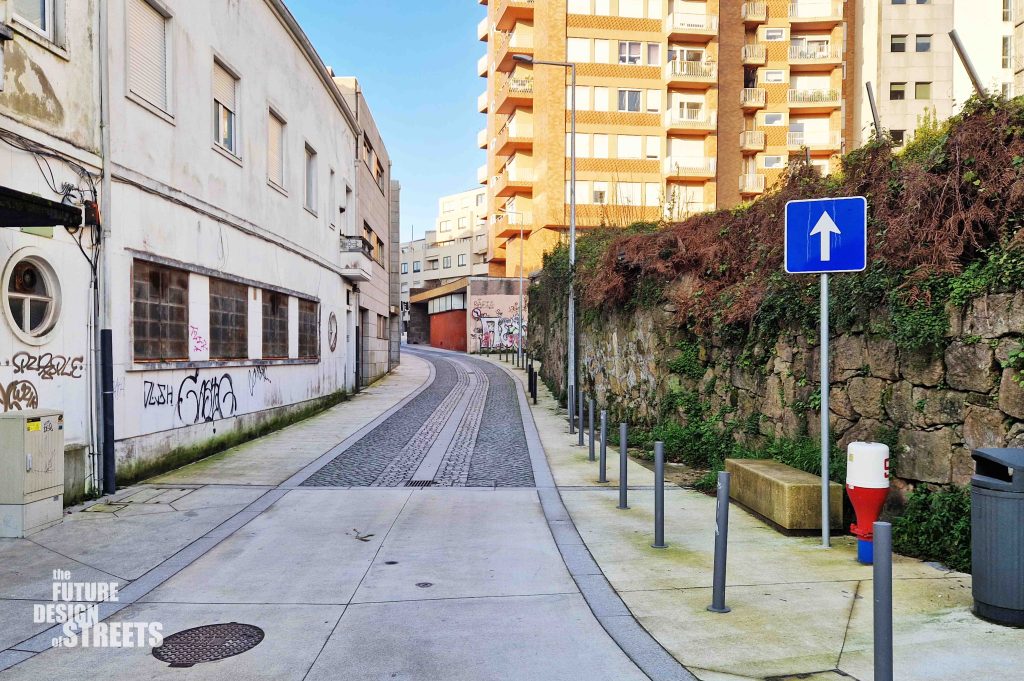
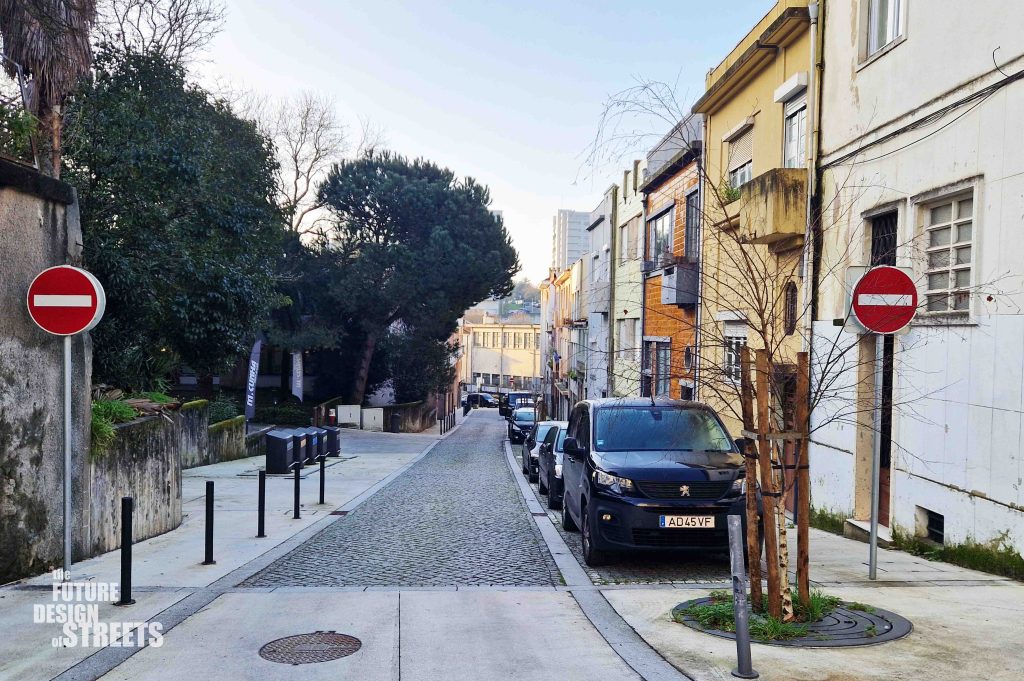
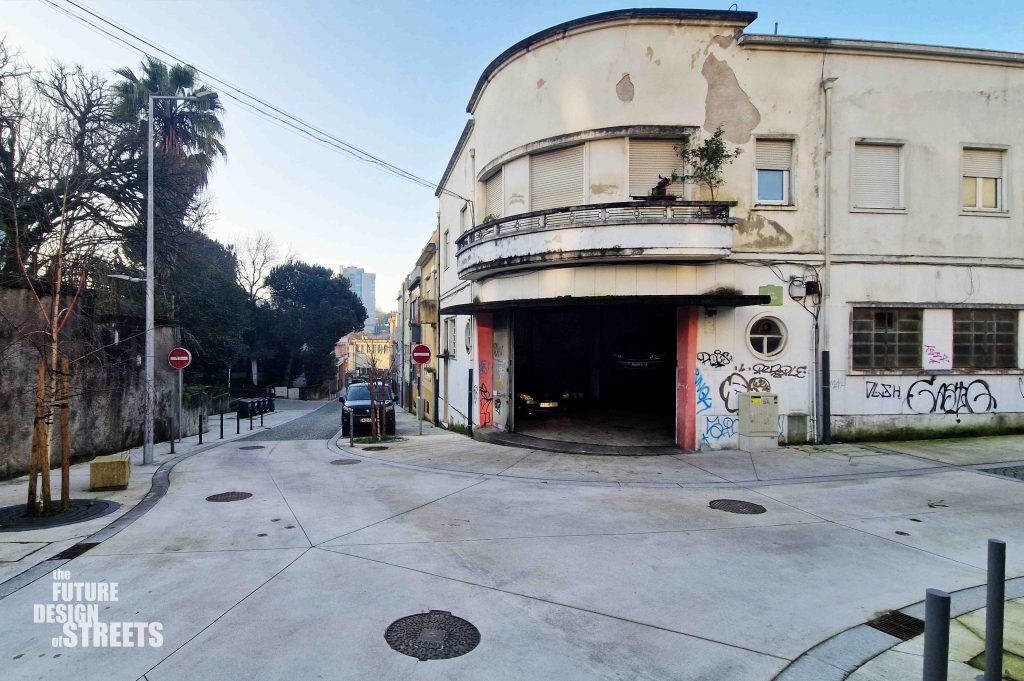
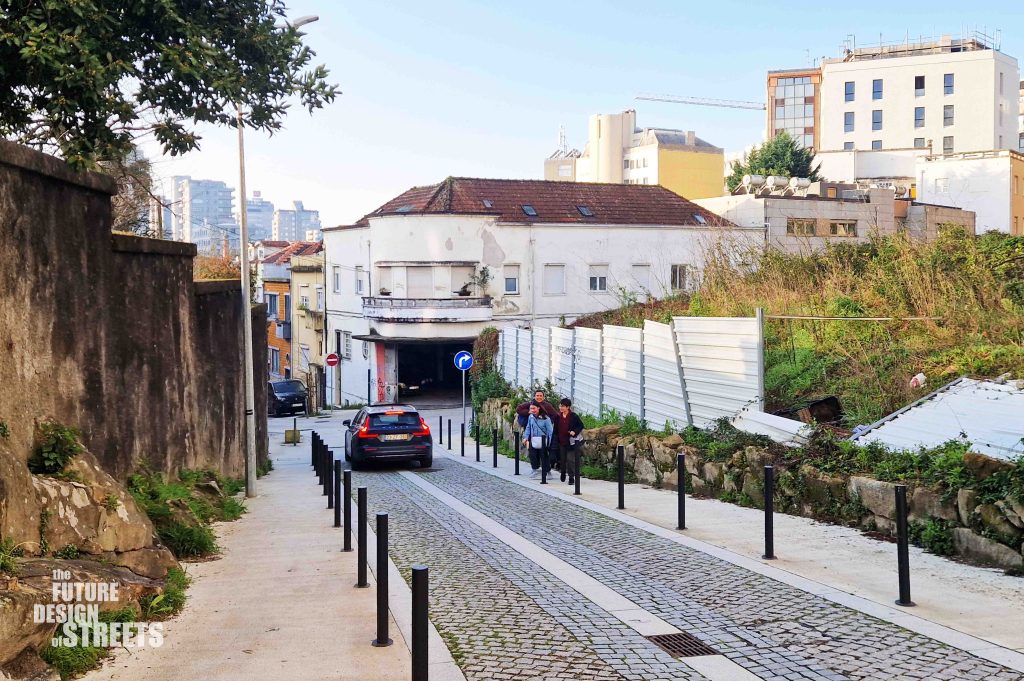
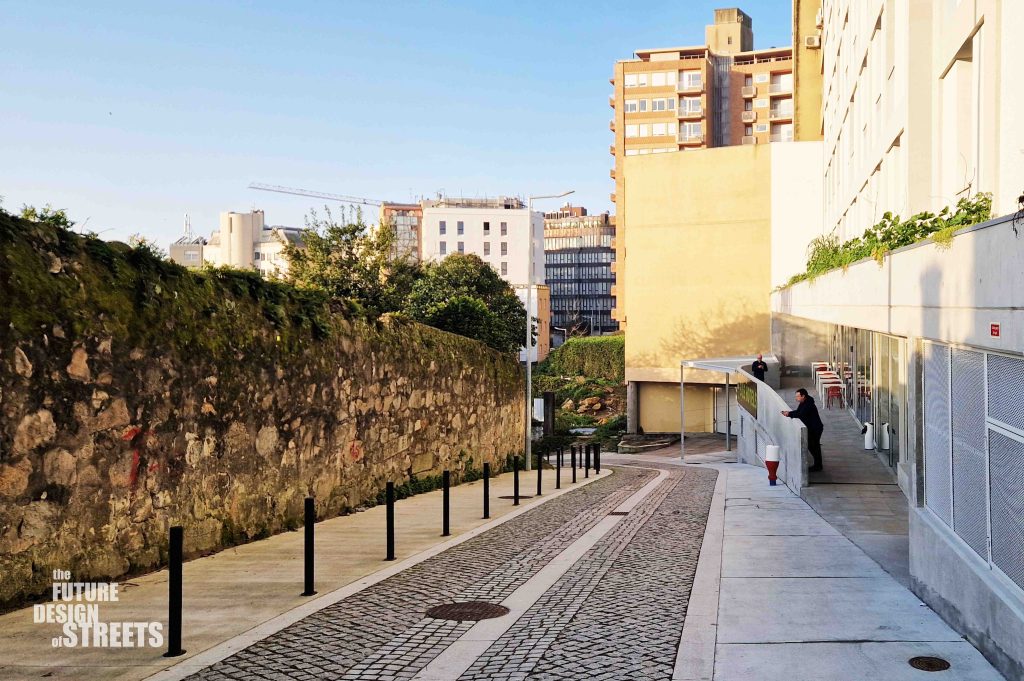
For Rua da Paz, these measures included traffic calming, sidewalk widening, and pavement renewal, creating safer and more comfortable conditions for pedestrians and cyclists while maintaining necessary local vehicle access.
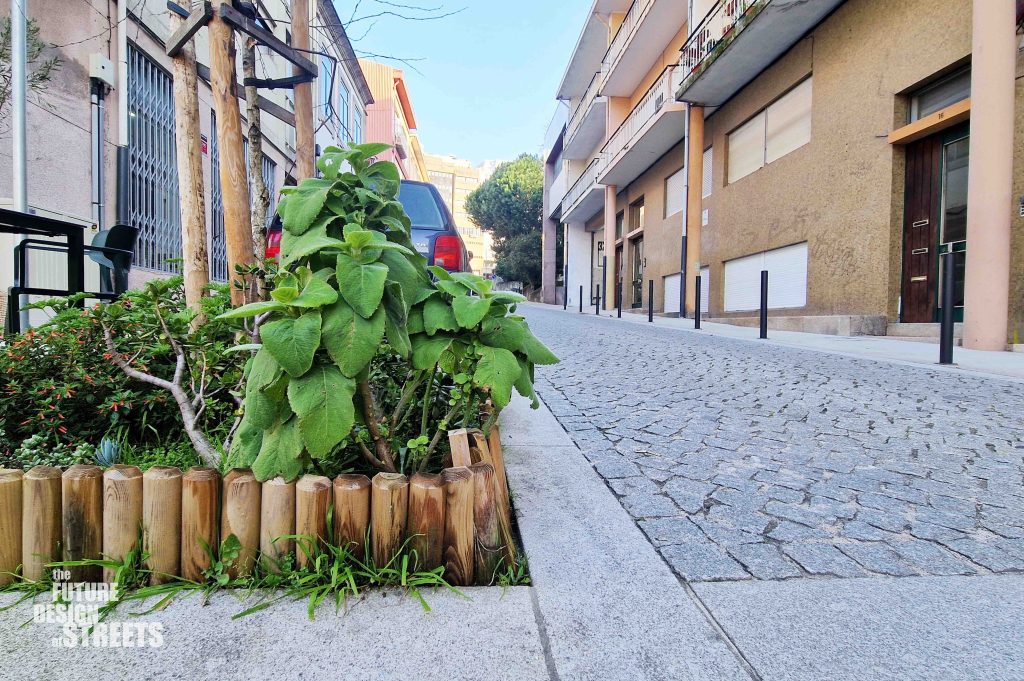
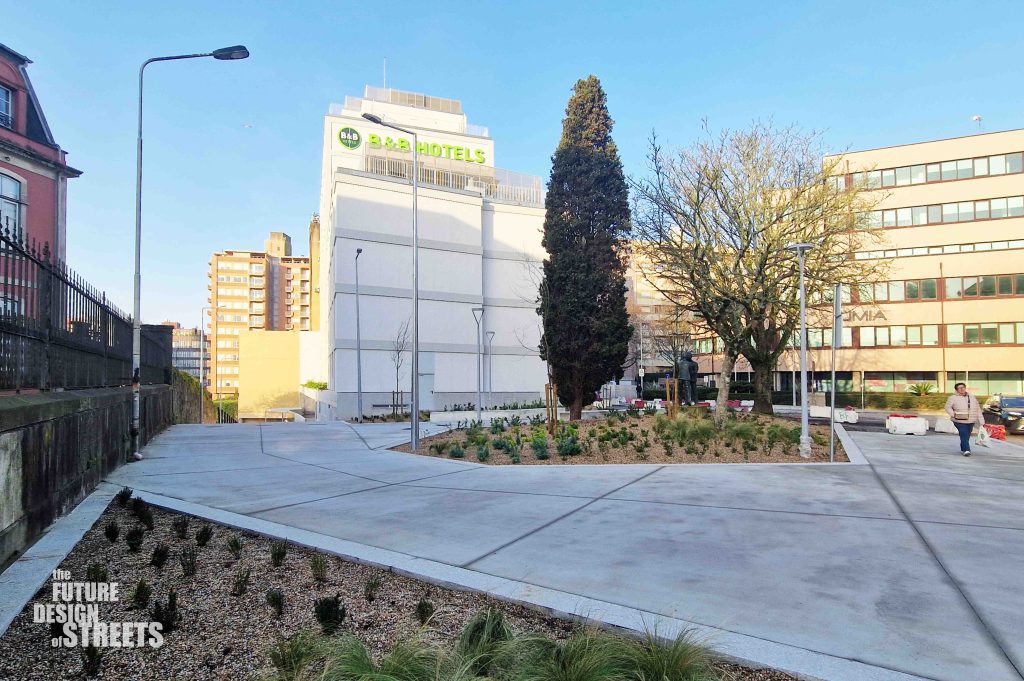
Environmental quality was enhanced through small-scale tree planting and pocket greenery, contributing to shading, air quality improvement, and microclimate moderation. Although modest, these interventions reflect the programme’s broader focus on incremental and context-sensitive urban renewal.
The street’s ground-floor uses — including residential entrances, cafés, and local shops — were preserved and activated by the improved pedestrian environment. Informal seating and safer crossings encourage social interaction, transforming Rua da Paz into a calmer, more inclusive, and resilient urban street.
By situating Rua da Paz within the Rua Direita programme, the project illustrates how Porto addresses historic street revitalization, mobility improvement, and incremental ecological integration simultaneously, creating streets that are more livable, accessible, and adaptable to climate change.
Photos
Map